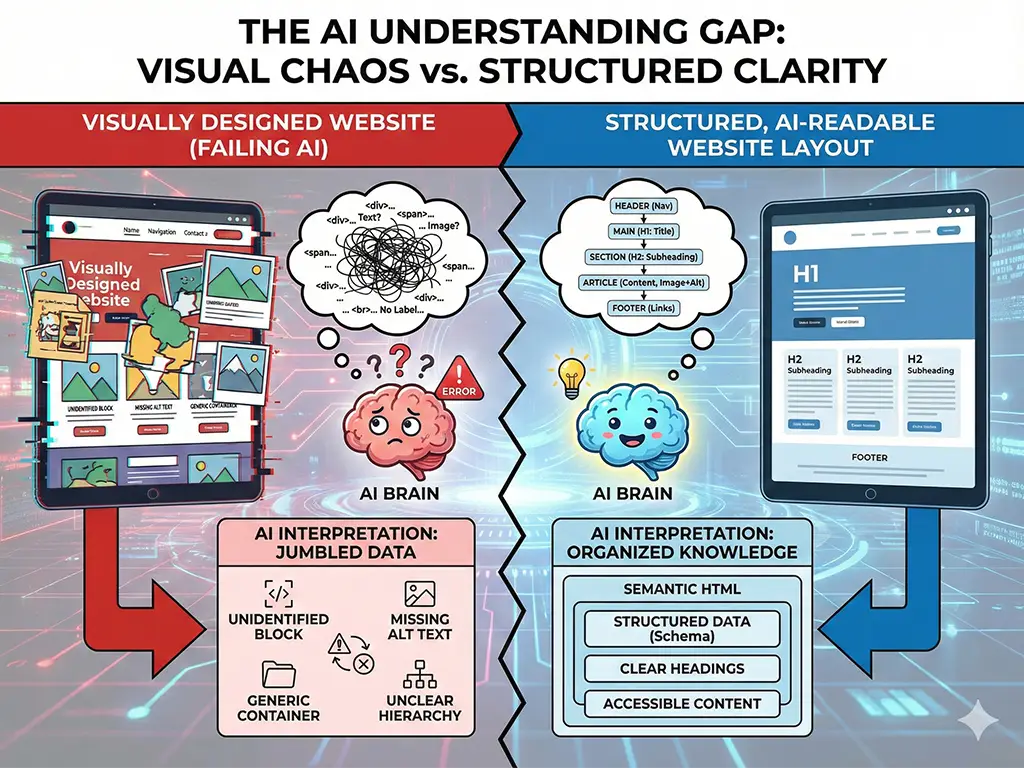

Schema markup is a structured data format that tells search engines and AI systems exactly what your content means, not just what it says.
As search shifts from keyword matching to semantic and AI-driven understanding, schema markup has become foundational infrastructure for visibility, accuracy, and trust. This article explains where schema markup is used, when to implement it, why it matters, how it works in practice, and what happens when it is missing.
What schema markup is and how it works
Schema markup is a standardized vocabulary of tags added to a website’s HTML that explicitly defines entities, relationships, and attributes within content.
Instead of forcing machines to infer meaning from text alone, schema markup provides clear labels such as whether a page describes a business, an article, a product, a person, an event, or a question and answer.
Most modern implementations use JSON-LD, a JavaScript-based format that sits in the page code without affecting visual design.
Where schema markup is used across the web
Schema markup is used anywhere structured understanding improves discovery, presentation, or interpretation of content.
Search engines use schema to generate rich results such as featured snippets, FAQs, product listings, reviews, breadcrumbs, and knowledge panels.
AI systems use schema to extract factual answers, identify authoritative sources, and connect entities across the web.
When schema markup should be implemented
Schema markup should be implemented as early as possible in a site’s lifecycle, ideally during initial design and development.
It is especially critical during site launches, redesigns, content expansions, or when preparing for AI-driven search environments.
Waiting until rankings decline or AI visibility drops often means playing catch-up against competitors with mature structured data.
Why schema markup matters for SEO and AI discovery
Schema markup improves how machines interpret your content, which directly impacts visibility, trust, and relevance.
For traditional SEO, schema increases eligibility for rich results that improve click-through rates and SERP prominence.
For AI and generative engines, schema acts as a confidence signal, helping systems select, summarise, and cite your content accurately.
How to implement schema markup correctly
Effective schema implementation starts with understanding your content model and business goals.
Key entities such as Organisation, WebSite, Article, Service, Product, and FAQ should be defined first, with properties populated accurately and consistently.
Markup must reflect visible content, follow schema standards, and be validated using testing tools.
What happens if you do not use schema markup
Without schema markup, search engines and AI systems must rely on inference, which increases the risk of misunderstanding your content.
Your pages may still rank, but they are less likely to appear in enhanced results, AI answers, or trusted summaries.
Over time, sites without structured data may lose visibility to competitors who provide clearer machine-readable signals.
Frequently Asked Questions
Is schema markup a ranking factor?
Schema markup is not a direct ranking factor, but it improves how content is understood and displayed, which indirectly supports SEO performance.
Do small websites need schema markup?
Yes. Smaller sites often benefit the most because schema helps establish clarity, credibility, and relevance early.
Can schema markup hurt my website?
Incorrect or misleading schema can cause issues, but accurate and standards-compliant markup is safe and beneficial.
How long does it take to see results from schema?
Search enhancements can appear within weeks, but AI-related benefits accumulate over time as systems reprocess content.
Key Takeaways
Schema markup is no longer optional infrastructure. It is a core requirement for modern search, AI visibility, and digital resilience.
Interon is a South African AI Readiness consultancy helping organisations structure their digital presence for AI-driven discovery. To understand how your site performs, run a free audit at /audit/ or explore our guidance at /learn/schema/.